
Decatur County Criminal Court Records
A Decatur County criminal court record begins when a criminal case is opened in court. The Decatur County Clerk administers criminal case records, including felonies, misdemeanors, and miscellaneous criminal matters. Clerk Janet Howell is the county Clerk named on the official Clerk page. The Clerk also processes criminal documents such as arrest warrants, release and bond forfeiture forms, bondsman production notices, and transport orders. Those records belong to the court case file, even when the case began with an arrest by a law-enforcement agency.
Criminal cases are heard in the local Circuit and Superior Court system at the Decatur County Courthouse. Decatur Circuit Court is a county trial court, and Decatur Superior Court is described by the county as a trial court of general jurisdiction hearing both criminal and civil cases. Magistrate Court is also listed by the county and supports local case handling. The Prosecutor reviews law-enforcement reports and files state or county charges, while the Clerk keeps the court file once the case is opened.
The Decatur County Prosecutor page identifies the local charging office for criminal cases. Once the prosecutor files charges, the court file becomes the place to read the official case progress.
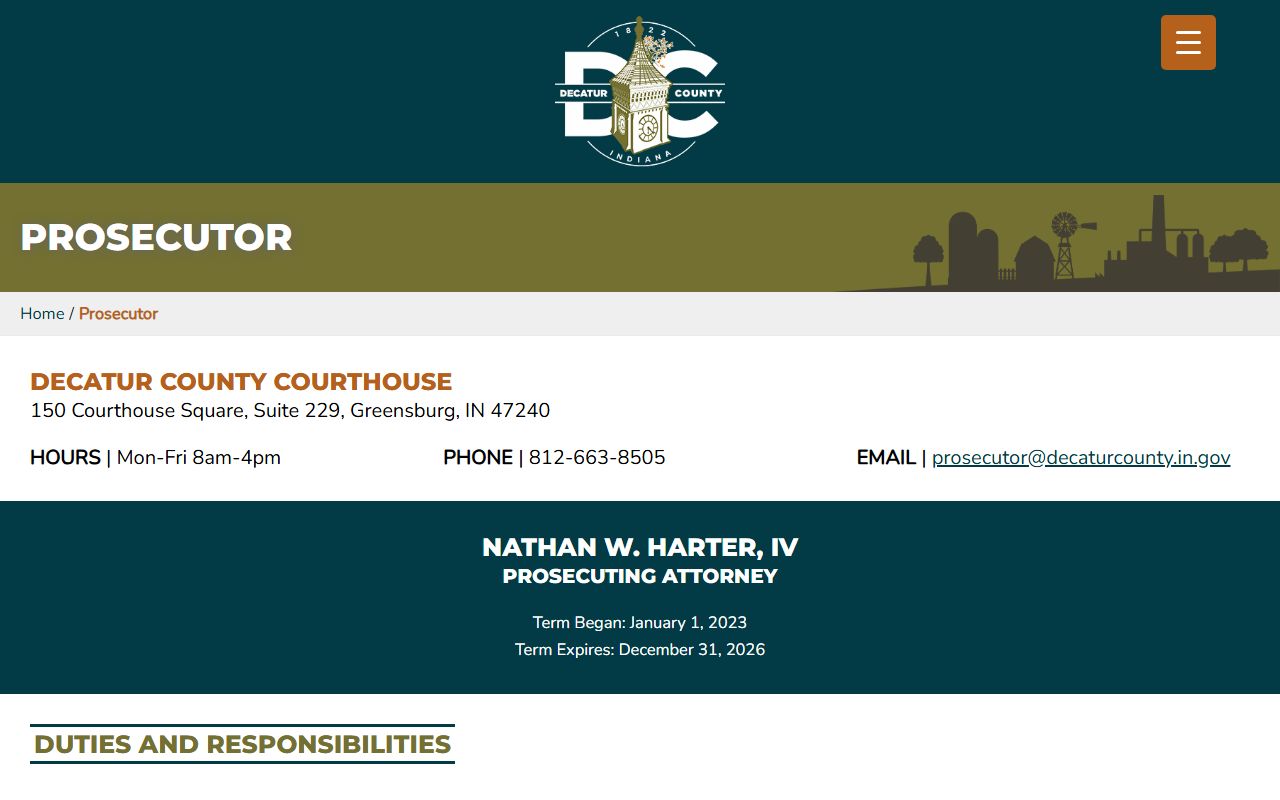
That charging role is the key difference between the police-side arrest event and the court-side criminal case record.
Search Decatur County Criminal Cases
Public Decatur County criminal court records are searched through Indiana MyCase. Use the Criminal & Citation category when narrowing results. A case number is the cleanest search key, but party name search can work when the number is unknown. If the result shows a matching Decatur County criminal case, open the case details and review the chronological case summary, parties, charges, hearings, financials, and documents.
- Open MyCase and choose By Case or By Party.
- Enter the case number, citation number, defendant last name, first name, or date of birth range when allowed.
- Use Decatur County, the court dropdown, Criminal & Citation, and file date filters if needed.
- Open the case and read charges, docket entries, hearings, disposition, and sentence lines.
- Contact the Decatur County Clerk for certified copies, older files, or documents that are not linked.
State criminal-history access is not the same as a Decatur County criminal case file. MyCase shows public court data. A statewide background check or post-conviction public defender matter follows a different route and may not include every docket document. If a search turns up custody or warrant concerns, Sheriff William B. Meyerrose's office is the official county sheriff channel at the Decatur County Sheriff page.
Decatur County Criminal Case Stages
The criminal court record should be read as a sequence. The filed charge starts the court case. The initial hearing or arraignment puts the defendant on notice of the charge and addresses early rights, bond, and future dates. Pretrial entries can include motions, discovery issues, plea talks, continuances, and hearings. The case then resolves through dismissal, plea, trial verdict, or another disposition, followed by sentence terms if there is a conviction.
Case flow: Charges Filed › Arraignment › Pretrial › Plea or Trial › Disposition › Sentencing
| Stage | What the Criminal Court Record Shows |
|---|---|
| Charges filed | The offense allegations, case number, court, filing date, prosecutor filing, and charge level where public. |
| Arraignment or initial hearing | Rights, plea entry, bond or release conditions, counsel status, and future hearing dates. |
| Pretrial and motions | Motions, orders, continuances, subpoenas, warrants, bond events, and conference settings. |
| Plea or trial | Whether a plea was entered, trial was held, charge was dismissed, or verdict was returned. |
| Disposition and sentence | Final result, sentence, probation, home detention, costs, fines, restitution, and related orders. |
Charge-level detail is narrower than the whole case file. For the arrest-to-charge path, use Decatur County arrest records and court charges; for all civil, probate, family, traffic, and criminal categories, use Decatur County court records.
What Decatur County Criminal Records Show
A Decatur County criminal court record can contain more than the charge name. It may show a defendant, prosecutor, defense counsel, court assignment, bond events, hearing dates, motions, orders, plea, verdict, disposition, sentence, probation, home detention, financial obligations, and appeal activity. MyCase may include final orders and judgments in criminal cases, but official records and complete balances still come from the Clerk.
| Field | What It Shows |
|---|---|
| Case number | The court's unique criminal case identifier. |
| Defendant | The person charged, with public party details shown by the court system. |
| Charges | Offense allegations, statute or code references when shown, severity, and charge status. |
| Warrant and bond entries | Arrest warrant, bench warrant, bond, forfeiture, release, or transport activity. |
| Hearings and motions | Scheduled court dates, continuances, filed requests, rulings, and orders. |
| Plea or verdict | Formal response to the charge or trial result. |
| Disposition | The final charge or case result, such as guilty, dismissed, acquitted, or other court action. |
| Sentence | Jail or prison terms, probation, home detention, fines, fees, restitution, and conditions. |
Charges and Convictions Compared
A charge is an accusation filed in court. A conviction is a final result after a guilty plea, guilty verdict, or other qualifying adjudication. Decatur County criminal court records can show charges that were reduced, amended, dismissed, or resolved by plea. Do not treat the first charge line as the final outcome. The disposition and sentence entries carry the result.
| Point | Charge | Conviction |
|---|---|---|
| Stage | Filed after arrest or investigation. | Entered after plea, verdict, or qualifying court result. |
| Proof level | Based on probable cause and prosecutor filing. | Requires proof beyond a reasonable doubt or a valid plea. |
| Docket clue | Appears near filing, initial hearing, amendment, or dismissal entries. | Appears in disposition, judgment, and sentencing entries. |
| Record effect | May remain visible even if later dismissed, unless restricted or expunged. | May affect sentence, probation, fines, restitution, and later eligibility issues. |
Note: Read the disposition line before deciding whether a Decatur County charge became a conviction.
Decatur Criminal Records Public Access
Indiana public access is shaped by the Access to Public Records Act and the Indiana Rules on Access to Court Records. The general rule is public access unless a statute, rule, or court order makes the record confidential. MyCase says public users can search public, non-confidential case information, and certain criminal documents may appear online, including final orders and judgments in criminal cases and non-confidential documents in miscellaneous criminal cases.
The Indiana expungement chapter affects arrests, charges, and convictions after a qualifying court order. The state code source shown below is relevant because expungement can change whether a Decatur County criminal court record remains public.
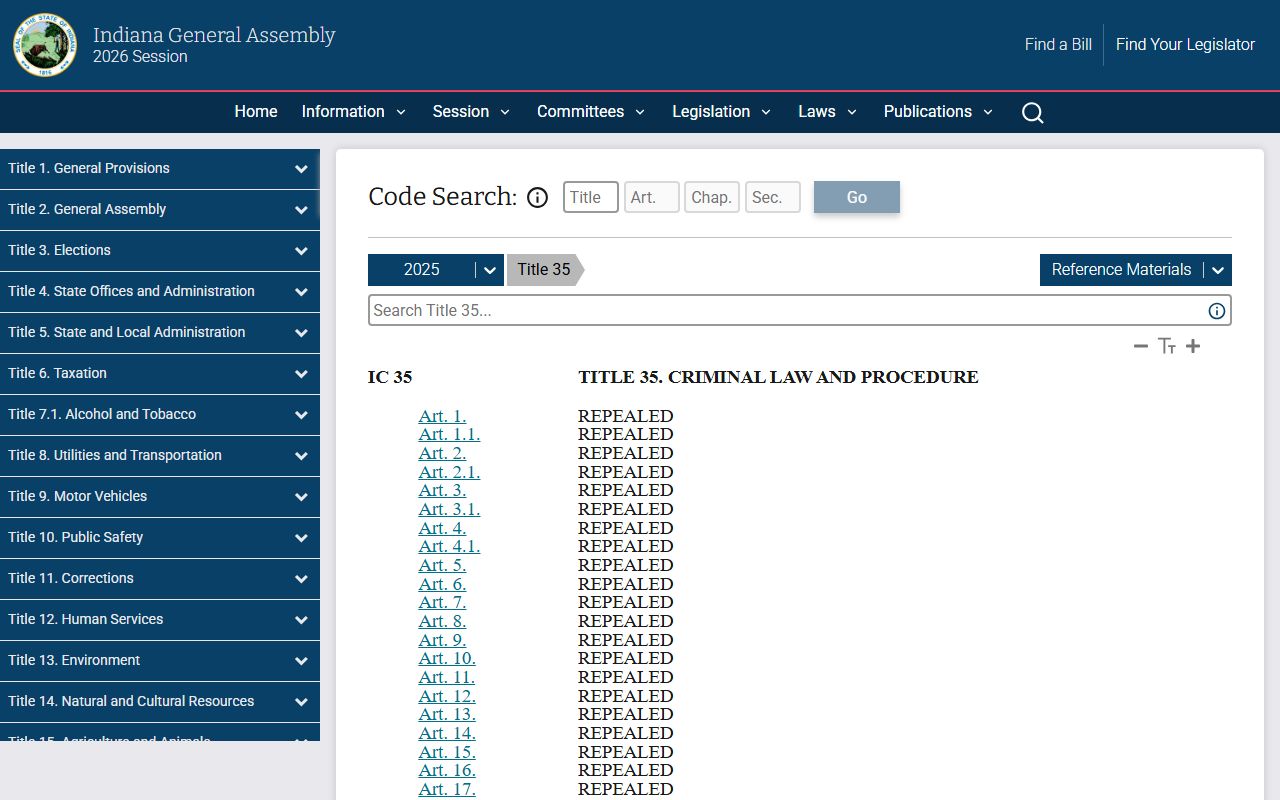
Expungement analysis depends on the exact charge result, sentence completion, waiting period, and later criminal history.
Sealed and Expunged Criminal Records
Sealing and expungement both limit public access, but they are not the same. Sealed records are hidden from ordinary public view by rule or court order. Expungement is a statutory process under Indiana Code 35-38-9 that can restrict access to eligible arrests, charges, and convictions. Juvenile cases, adoption-related material, mental-health records, and private identifiers may also be confidential or redacted.
| Point | Sealed | Expunged |
|---|---|---|
| Visibility | Removed from ordinary public view by rule or order. | Restricted after a qualifying Indiana expungement order. |
| Trigger | Confidential case type, court rule, statute, or judge's order. | Petition and court order under Indiana expungement law. |
| Examples | Juvenile, mental-health, adoption-related, sealed filings, or protected identifiers. | Eligible arrest-only, dismissed, acquitted, or conviction matters. |
| Public search effect | May not appear, or details may be redacted. | May be removed, restricted, or marked depending on order type. |
Sentencing and Court Services Records
After conviction, the criminal record may show sentence terms, fines, court costs, restitution, probation, home detention, work release, or treatment-oriented program participation. Decatur County Court Services lists probation, home detention, pre-trial services, Wellness Court, and Work Release. Court Services also has online payment options for adult probation, juvenile probation, community corrections, and Wellness Court.
Financial entries in MyCase can show amounts owed, credits, and payments, but the state warns they may not reflect recent payments, charges, or accrued interest. If a criminal docket includes restitution, court costs, supervision payments, or a payment plan, use the Clerk or Court Services office tied to the entry. That is especially important when the case is near completion or a license, release, or probation issue depends on a current balance.
Prosecutor and Public Defender Paths
The Decatur County Prosecutor is the local charging authority for state and county criminal prosecutions. The Indiana Prosecuting Attorneys Council profile confirms the prosecutor contact information for Decatur County. No official Decatur County public defender office page was located in the county sources, so current appointed-counsel questions should go through the court handling the case or the Clerk rather than a listed local public defender office.
The IPAC Decatur County prosecutor profile confirms the local prosecutor contact block used for criminal records and charging context.
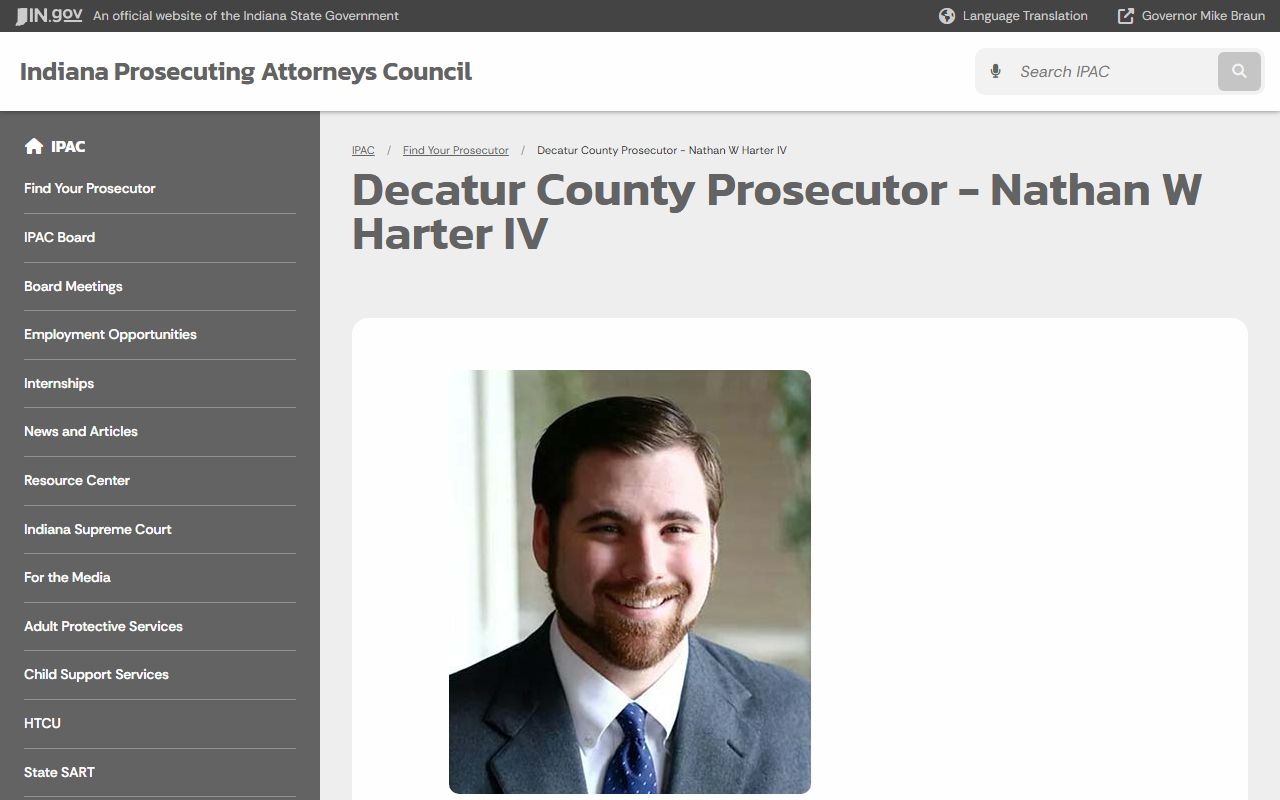
The prosecutor contact source should not be used as a substitute for the court docket, which controls filed case activity.
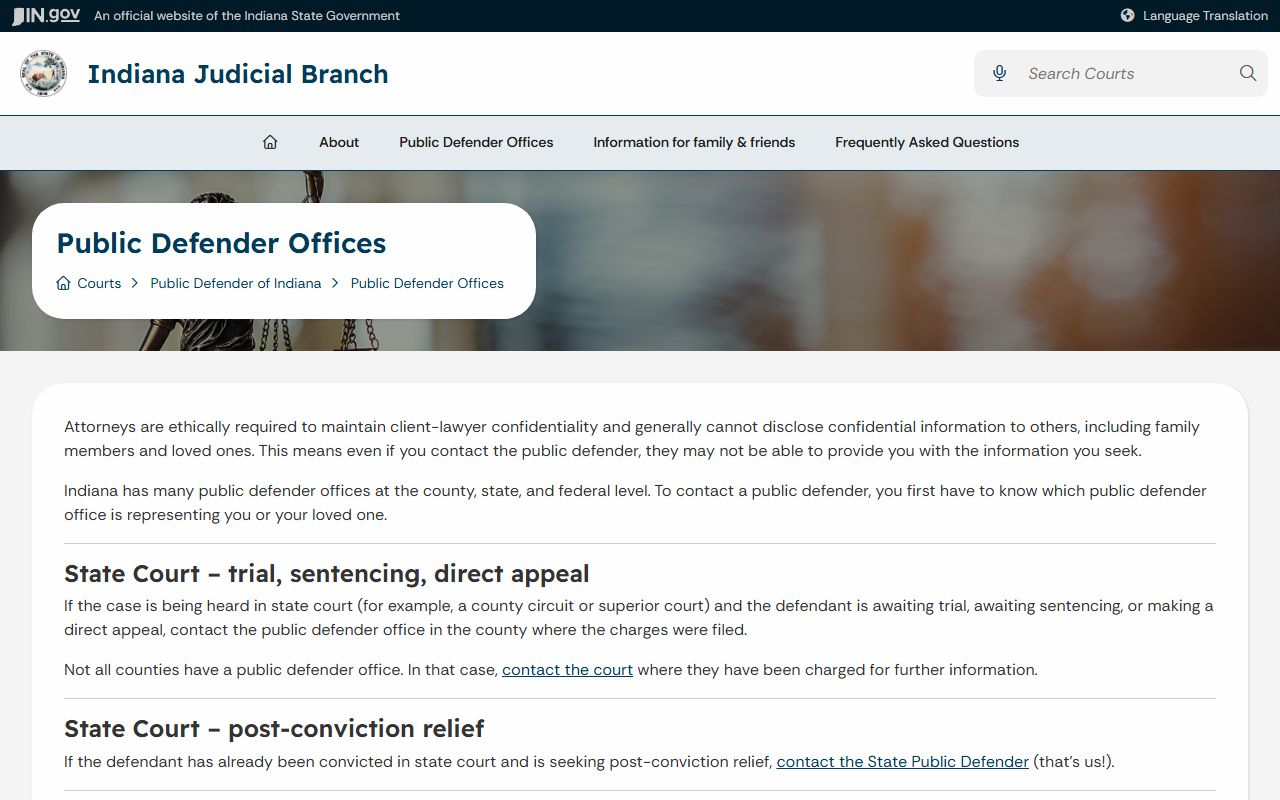
The Indiana State Public Defender is a statewide post-conviction office, not a published Decatur County trial-level public defender page. It can matter after conviction, but trial counsel issues usually remain with the court file.
Post-conviction resources and trial-court record access should be kept separate when reading criminal files.
The Indiana Public Defender Commission links page gives statewide indigent-defense standards context. It does not create a local Decatur County office listing by itself.
Use the active case court for appointment, appearance, and counsel-of-record questions.